The Cluster
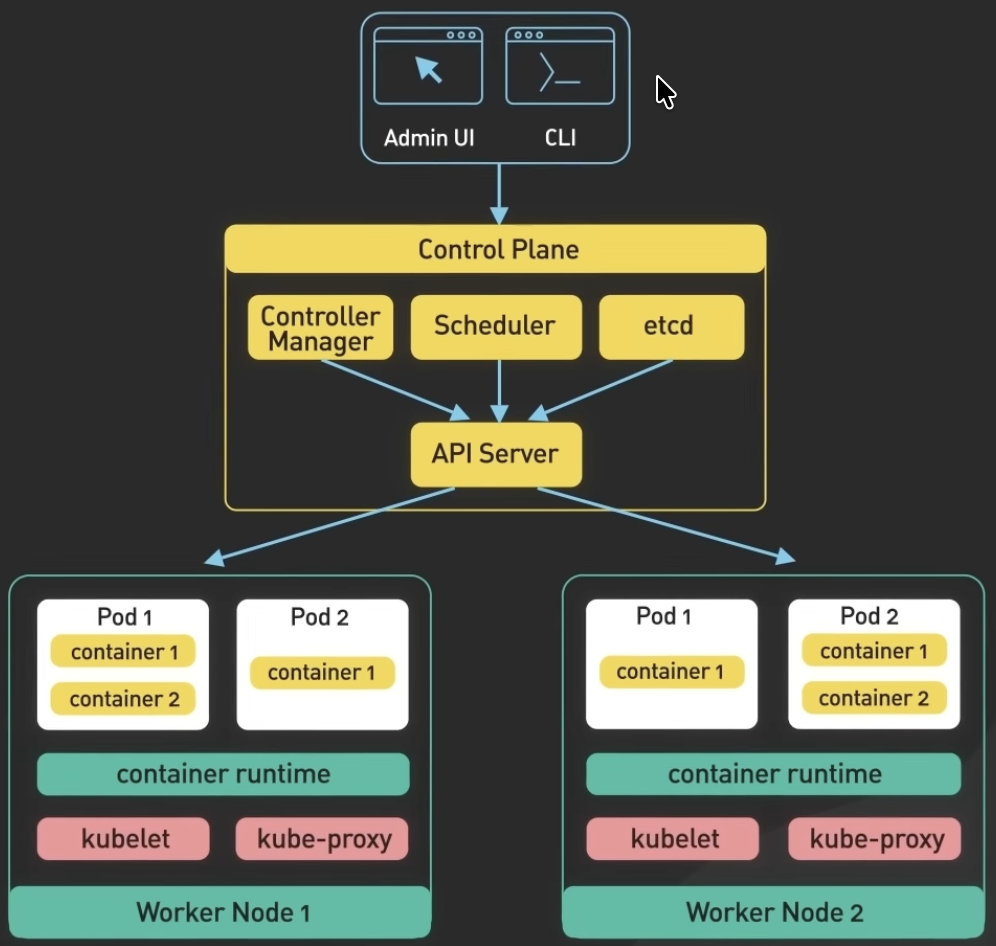
A Kubernetes cluster has two kinds of machines: a control plane that manages the cluster, and worker nodes that run your applications.
                Kubernetes Cluster

       ┌────────────────────────────┐
       │       Control Plane        │
       └────────────────────────────┘
                  │
        ┌─────────┴─────────┐
        ▼                   ▼
  Worker Node 1       Worker Node 2
Zooming in, each side runs a fixed set of components:
┌─────────────────── Control Plane ───────────────────┐
│                                                      │
│   API Server ←──── kubectl / CI/CD                  │
│       │                                              │
│   etcd         Scheduler     Controller Manager      │
└──────────────────────────────────────────────────────┘
                    │
         ┌──────────┼──────────┐
         ↓          ↓          ↓
      Node 1      Node 2      Node 3
    ┌────────┐  ┌────────┐  ┌────────┐
    │kubelet │  │kubelet │  │kubelet │
    │kube-   │  │kube-   │  │kube-   │
    │ proxy  │  │ proxy  │  │ proxy  │
    │Pod Pod │  │Pod Pod │  │Pod Pod │
    └────────┘  └────────┘  └────────┘
Master vs Worker
| Control Plane (Master) | Worker Node |
|---|---|
| Manages the cluster | Runs applications |
| API Server | kubelet |
| etcd | kube-proxy |
| Scheduler | Pods |
| Controller Manager | Containers |
The control plane makes decisions — what runs where, how many replicas, what to do when something fails. Worker nodes carry them out. The control plane holds kube-apiserver, etcd, kube-scheduler, and kube-controller-manager; every worker runs kubelet, kube-proxy, and a container runtime. The next lesson examines each component in detail.
The Request Flow
Every change to a cluster — whether from a developer's terminal or a CI/CD pipeline — follows the same path:
Developer
   │
kubectl apply
   │
   ▼
API Server        (validates and receives the request)
   │
   ▼
etcd              (desired state is recorded)
   │
   ▼
Scheduler         (picks the best worker node)
   │
   ▼
Worker Node       (kubelet starts the containers)
   │
   ▼
Pod Running
Nothing talks to the cluster except through the API Server, and nothing is "true" in the cluster until it's written to etcd. Keep this flow in mind — every object you create for the rest of this course (Pods, Deployments, Services) travels exactly this route.